You must be 21 years of age or older to enter this site.
By entering, you confirm you are 21 years of age or older.
BPC-157 (Body Protection Compound-157) is a synthetic pentadecapeptide derived from a partial sequence of the human body protection compound (BPC) protein, which is naturally present in gastric juice. This 15-amino acid peptide (Gly-Glu-Pro-Pro-Pro-Gly-Lys-Pro-Ala-Asp-Asp-Ala-Gly-Leu-Val) has been the subject of extensive peer-reviewed research spanning over two decades.
Distinguished by its remarkable stability in gastric conditions — a property unusual among peptides of this size — BPC-157 maintains structural integrity across a wide pH range. This gastric stability has made it a compound of significant interest in in-vitro and preclinical research settings. Published studies have explored its interactions with multiple biological pathways, including the nitric oxide (NO) system, GABAergic pathways, and dopaminergic signaling cascades.
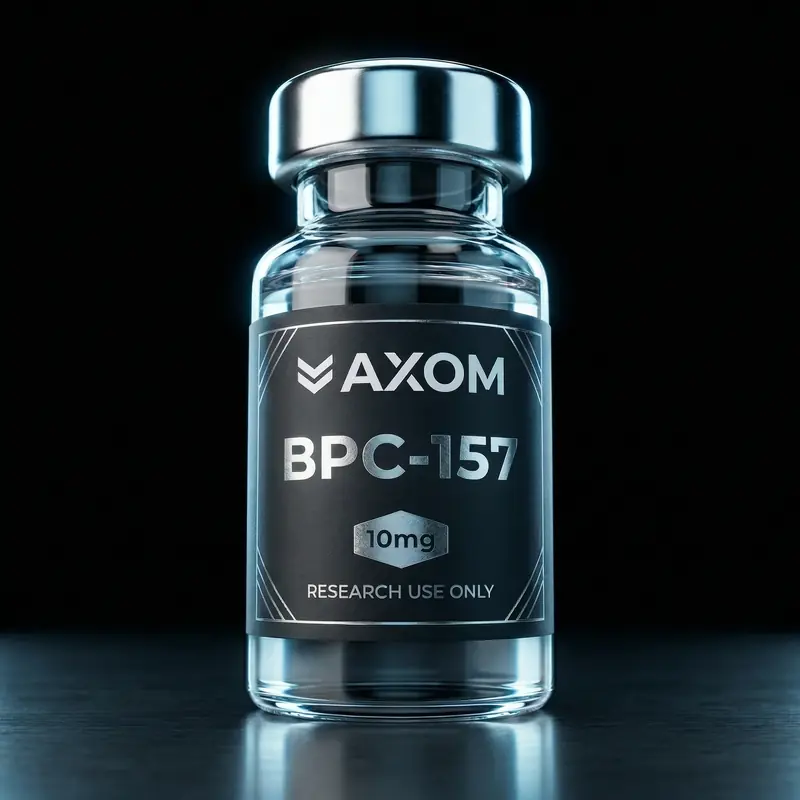
AXOM BPC-157 is manufactured under strict cGMP-equivalent protocols and verified to ≥99% purity via reverse-phase HPLC. Each lot is accompanied by a Certificate of Analysis documenting identity, purity, peptide content, and endotoxin levels. Available in 5mg lyophilized format. For research and laboratory use only.
15-amino acid synthetic peptide derived from a partial sequence of the human BPC protein found in gastric juice, enabling targeted molecular pathway research.
Maintains structural integrity across a wide pH range — an unusual property for peptides of this size, enabling versatile in-vitro experimental applications.
≥99% HPLC-verified purity with full COA documentation. Every lot independently tested by third-party analytical laboratories.
Comprehensive review encompassing over 20 years of published research on the stable gastric pentadecapeptide BPC 157. Examines the peptide's molecular interactions with the NO system, prostaglandin system, and dopamine system in in-vitro and preclinical models across multiple research groups.
Detailed mechanistic analysis of BPC 157 activity in gastrointestinal tract models. Examines the peptide's interactions with growth factor signaling pathways, including VEGF, EGF, and their receptor systems, as characterized through in-vitro binding and activity assays.
In-vitro study examining the effects of BPC 157 on tendon fibroblast cell cultures. Characterized the peptide's influence on cell migration, survival, and outgrowth in controlled laboratory conditions using standardized fibroblast assay protocols.
| Product Name | BPC-157 (Body Protection Compound-157) |
| Synonyms | BPC-157, BPC 157, Bepecin, PL 14736, PL-10 |
| CAS Number | 137525-51-0 |
| Molecular Formula | C62H98N16O22 |
| Molecular Weight | ~1,419.53 Da |
| Sequence | Gly-Glu-Pro-Pro-Pro-Gly-Lys-Pro-Ala-Asp-Asp-Ala-Gly-Leu-Val |
| Sequence Length | 15 amino acids |
| Origin | Partial sequence of human BPC protein (gastric juice) |
| Stability | Stable across wide pH range (gastric conditions) |
| Purity | ≥99% (Reverse-Phase HPLC) |
| Form | Lyophilized white powder |
| Available Sizes | 5mg |
| Solubility | Soluble in sterile water, bacteriostatic water |
| Endotoxin | <1 EU/μg (LAL method) |
| Certification | COA included with every order |
| Intended Use | For research and laboratory use only |
BPC-157 is supplied as a lyophilized powder and should be reconstituted with sterile bacteriostatic water (BAC water) for research applications.
All orders ship within the continental United States via USPS or UPS. Peptides are shipped at ambient temperature — lyophilized peptides are stable during transit. Free shipping on orders over $250.
Buy more of the same item and save automatically at checkout. No code needed.